
Table of Contents
- What a Montessori Bedroom Actually Means for a 1-Year-Old
- Montessori Floor Bed for 1-Year-Old: Safety and Setup
- Low, Accessible Furniture and Child-Sized Spaces
- Montessori Toy Storage Ideas That Encourage Independence
- Montessori Bedroom Safety: Creating a Protected Environment
- Montessori Bedroom Wall Art and Decor That Grows With Your Child
- Sample Layouts and Budget-Friendly Setup Ideas
- Frequently Asked Questions
Last Updated: October 20, 2026
What a Montessori Bedroom Actually Means for a 1-Year-Old
A montessori bedroom for 1 year old is a thoughtfully organised space designed around your child's independence and natural curiosity. Unlike traditional nurseries packed with colourful toys and decorations, this approach prioritises order, accessibility, and freedom of movement. The goal is simple: create an environment where your one-year-old can safely explore, learn, and develop confidence without constant adult intervention.
This isn't about rigid rules or expensive furniture. It's about understanding how a one-year-old develops and designing the room to support that growth.
The core principles are straightforward:
- Child-height accessibility, everything your child needs is within reach
- Order and simplicity, too many options overwhelm; curated choices invite focus
- Freedom of movement, clear floor space for crawling, walking, and exploring
- Natural materials, wood, cotton, and simple textures over plastic and bright synthetics
- Beauty and purpose, every item serves a function or supports learning
This isn't a one-size-fits-all formula. A montessori bedroom 1 year old setup in a small flat looks different from one in a larger house, and that's fine. The principles adapt to your space and budget.
Montessori Floor Bed for 1-Year-Old: Safety and Setup
Is Your Child Ready for a Floor Bed?
A floor bed is a low mattress placed directly on the floor, allowing your child to get in and out independently. Not every family uses one, and that's okay. The decision depends on your child's development and your comfort level.
Most children are ready for a floor bed between 12 and 18 months, though some younger toddlers manage it earlier. Your child should be able to:
- Walk or cruise confidently without frequent falls
- Understand basic safety boundaries (not running toward stairs unsupervised)
- Sleep through most of the night without needing you to lift them back into bed repeatedly
If your one-year-old is still wobbly or wakes frequently needing reassurance, a traditional cot remains safer and more practical. There's no pressure to transition before your family is ready.
Sleep safety guidance from the Australian Red Cross emphasises that whatever sleep surface you choose must meet current safety standards. A floor bed works only if the room itself is completely baby-proofed, no gaps where small fingers can get trapped, no hard furniture edges at head height, and clear sightlines for you to monitor your child.
Floor Bed Placement and Mattress Choices
If you decide a floor bed suits your family, placement matters. Position it in a corner or against a wall so your child can't roll underneath furniture. Leave at least 60 centimetres of clear space on the accessible side for safe entry and exit.
Mattress options include:
- Standard cot mattress on the floor, familiar, affordable, meets safety standards
- Futon or thin tatami mat, lower profile, Japanese-inspired aesthetic
- Foam camping mat with fitted sheet, budget-friendly, easy to clean
- Toddler floor bed frame, slightly raised (10-15 centimetres), with safety rails
Whichever you choose, use a fitted sheet and keep the bed clear of pillows, duvets, and stuffed animals. Your child needs nothing but a fitted sheet and perhaps a lightweight sleep sack for warmth.
Ensure the mattress itself is firm and supportive. Soft surfaces increase the risk of positional asphyxia, so avoid memory foam or overly plush options designed for adults.
Low, Accessible Furniture and Child-Sized Spaces
The furniture in a montessori bedroom 1 year old setup should be scaled to your child's actual size.
Low shelves are the centrepiece. Open wooden shelves at child height (around 30-45 centimetres) let your child see all available toys and books at once.
A small table and chair set, or even a cushioned floor spot, creates a dedicated activity area.
A low mirror (mounted safely at child eye level, 60-90 centimetres high) supports self-awareness and movement exploration. Your one-year-old will spend time looking at themselves, which is developmentally normal and valuable.
Avoid furniture with wheels or unstable bases. Your child will pull up and lean on everything, so stability is non-negotiable. Cheap particle-board units tip easily; solid wood or well-constructed alternatives are worth the investment.
Montessori Toy Storage Ideas That Encourage Independence
Toy clutter is the enemy of focus. A room packed with toys overstimulates and makes it hard for your child to choose. Instead, use toy rotation, keep 4-6 items accessible, store the rest away, and swap them every 1-2 weeks.
Baskets and trays are your best tools:
- Shallow wooden trays, hold 2-3 items, easy for small hands to carry
- Low fabric baskets, soft-sided, safe if tipped, visually calm
- Divided shelving boxes, one item per section, maximum clarity
- Open crates, affordable, durable, easy to see inside
Each basket or tray holds one type of material: wooden blocks in one, scarves in another, board books in a third. This organisation helps your child understand categories and make intentional choices rather than grabbing randomly.
Rotation and Decluttering for Toddlers
A rotating toy system keeps your child engaged without sensory overload. Every 7-10 days, swap 2-3 items. This simple change makes old toys feel new and maintains focus.
Before rotation, declutter ruthlessly. Your one-year-old needs:
Montessori Numbers Poster | Educational Art Print →
- 4-6 wooden blocks or stacking toys
- 2-3 board books with sturdy pages
- 1-2 items for cause-and-effect play (balls, simple puzzles)
- Sensory materials (scarves, wooden spoons, safe kitchen items)
- A few realistic toy animals or dolls
Avoid toys that require batteries, light up, or make noise. These overstimulate and discourage focused play. Simple, open-ended toys, blocks, scarves, wooden shapes, hold your child's attention longer because they invite creativity.
Store rotated toys in a closed cupboard or under the bed. Out of sight means out of mind, so your child won't feel they're missing out.
Montessori Bedroom Safety: Creating a Protected Environment
Safety is the foundation of independence. A truly montessori bedroom for 1 year old must be completely baby-proofed so your child can explore freely without constant "no" from you.
Start with the essentials:
- Secure all furniture to walls, shelves, dressers, and even lightweight units can tip
- Cover electrical outlets with tamper-resistant plates
- Remove blind cords or secure them out of reach
- Pad sharp furniture corners with soft guards
- Install safety gates at doorways if the room opens to stairs or unsafe areas
- Keep the floor clear of small objects, cords, and choking hazards
- Use a firm mattress only, no soft bedding, pillows, or bumpers on any sleep surface
Room-by-Room Safety Checklist
If your one-year-old's bedroom connects to a bathroom or adjoining space, extend your safety checks:
- Bathroom access, lock the door or install a gate; drowning can happen in seconds with just centimetres of water
- Kitchen connection, secure any access; remove cleaning supplies and sharp utensils
- Staircase proximity, install gates at both top and bottom if stairs are nearby
- Window safety, ensure windows don't open wide enough for your child to fall through; secure blind cords
- Heating and cooling, keep radiators, heaters, and air conditioning units out of reach or guarded
Walk through the room at your child's eye level. Literally get down on the floor and look around. What can they reach, pull down, or put in their mouth? Fix those hazards before your child finds them.
Safe Sleep Australia guidelines recommend regular safety audits as your child grows and becomes more mobile. What was safe at 12 months may not be at 18 months.
Montessori Bedroom Wall Art and Decor That Grows With Your Child
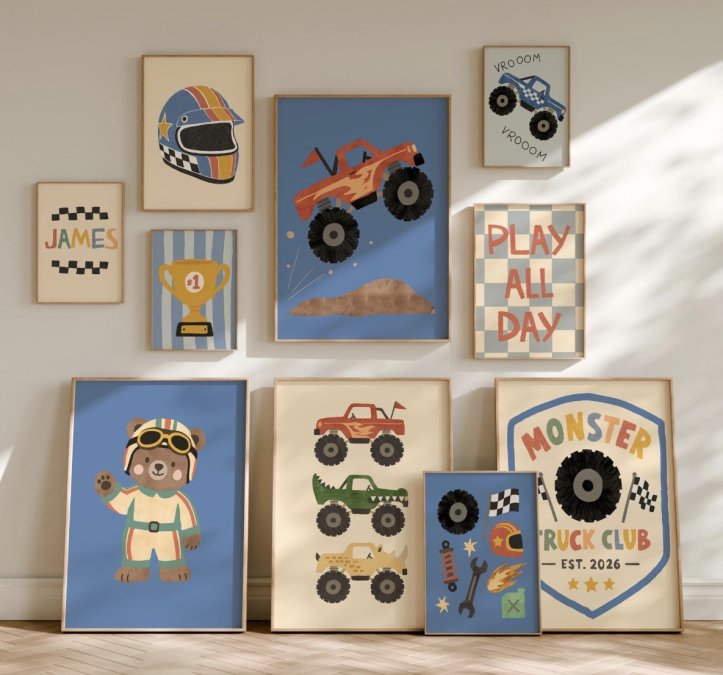
The walls in a montessori bedroom 1 year old should be calm and uncluttered, but not bare. Art serves a purpose here, it supports learning, beauty, and connection to your family story.
Choose art thoughtfully:
- Educational posters, alphabet, numbers, colours, placed at child eye level invite exploration
- Family photos, your child recognising themselves and loved ones builds identity and security
- Nature-inspired prints, simple botanical illustrations, animals, landscapes create a soothing atmosphere
- Personalised keepsakes, birth date art, name prints, milestone markers add meaning
Avoid overstimulating designs with bright neon colours or busy patterns. Soft, muted tones, sage, cream, soft grey, warm wood tones, create the calm environment where focus thrives.
Little Lemons Art specialises in hand-drawn nursery prints designed to grow with your child. The Montessori Numbers Poster and Montessori Alphabet Poster pair educational content with whimsical, gentle illustrations.

Consider a small gallery wall at child height. Three to five pieces create visual interest without clutter.
Sample Layouts and Budget-Friendly Setup Ideas
Small Room Adaptations
If your one-year-old's bedroom is compact, every centimetre counts. Prioritise ruthlessly:
- Vertical storage, tall, narrow shelves use wall space instead of floor space
- Dual-purpose furniture, a low bench with storage underneath, a cot with drawers
- Wall-mounted shelves, free up floor space for movement
- Fold-away activity mat, roll it up when not in use
- Corner floor bed, tucks into an unused corner, leaving the rest of the room open
In a small space, declutter even more aggressively. Keep only 3-4 toys accessible at any time. The room should feel open and calm, not cramped.
Low-Cost Setup Using Existing Items
You don't need to buy new furniture. Many families successfully set up a montessori bedroom 1 year old on a tight budget:
- Cot mattress on the floor instead of a specialised floor bed frame
- Plastic storage crates (AUD $5-10 each) instead of designer baskets
- Cardboard boxes covered with fabric as toy storage
- Low shelves from budget retailers, Kmart, Target, or Bunnings stock simple wooden units under AUD $50
- DIY mirror, mount a cheap acrylic mirror at child height using removable adhesive strips
- Homemade activity trays, use small plates or shallow containers you already own
The key is intentional curation, not expensive purchases. A room with five carefully chosen wooden toys and calm decor will serve your child better than one packed with cheap plastic items.
For wall art, Little Lemons Art offers digital downloads in The Learning Wall bundle, ten printable educational posters for AUD $15.

Creating a montessori bedroom for your one-year-old doesn't require perfection or a large budget. Our hand-drawn educational prints and personalised keepsake designs help you create a space that's both beautiful and developmentally supportive. Shop All to explore designs that will grow with your little one.
Frequently Asked Questions
Can a 1-year-old sleep safely on a floor bed?
Yes, if your child meets readiness signs: rolling consistently, not rolling out of bed during naps, and showing interest in climbing in and out. Start with a low, firm mattress (5-10 cm) on a waterproof base, surrounded by a safety rail or cushions to prevent rolling onto hard floors. Ensure the room is completely childproofed, with no cords, sharp edges, or small objects within reach. Always supervise floor-bed transitions and consult your health visitor if you have concerns about your child's development or sleep safety.
What furniture does a 1-year-old need in a Montessori bedroom?
Essentials include a low bed (floor bed or very low frame), low open shelves for toy storage, a child-height mirror, a small table and chair set, and a soft area for sitting or reading. Avoid tall furniture that requires climbing or reaching. Each piece should be accessible without adult help, encouraging independence. Add a low shelf for books displayed spine-out or face-forward, and consider a low coat rack or basket for clothing. Prioritise safety and accessibility over quantity; a sparse, well-organised room supports focus better than a cluttered one.
How do you organise toys and books in a Montessori bedroom?
Use low, open baskets or shallow trays on accessible shelves, with one toy or activity per container. Rotate toys every 1-2 weeks, storing extras out of sight to reduce overwhelm and maintain interest. Display books face-forward on low shelves or in picture-book stands so your child can see covers and select independently. Group similar items: puzzles together, musical instruments in one basket, sensory toys in another. Declutter regularly, removing broken toys and items your child has outgrown. This organisation teaches order and helps your child develop decision-making skills.
What should you put on the walls in a Montessori bedroom?
Choose simple, calm decor that supports learning without overwhelming the senses. Educational posters like alphabet, numbers, and colour charts hung at child height encourage early literacy and numeracy. Hand-drawn nursery art with soft, natural colours creates a warm atmosphere and can grow with your child as they develop. Avoid busy patterns, bright neon colours, and character-based decor. Include a low mirror (at least 60 cm wide) so your child can see themselves and explore movement. Personalised artwork or milestone prints add meaning without clutter. Consider Little Lemons Art's educational posters, such as the Montessori Numbers or Alphabet Poster, which combine learning with beautiful, timeless design.